
Introduction
For many young South Africans, access to education is not just about getting a qualification—it’s about securing a real pathway into employment. This is where SETA bursaries continue to stand out in 2026.
Unlike traditional funding models, SETA bursaries are built around one key principle: train for jobs that actually exist. This approach has made them one of the most effective tools in South Africa’s skills development system, especially for unemployed youth.
As more students look for funding that leads to real career opportunities, understanding why SETA bursaries work—and how to access them—has never been more important.
What Is a SETA Bursary?
A SETA bursary is a financial support programme offered by Sector Education and Training Authorities (SETAs) to help students study in fields that are in demand within specific industries.
SETAs are mandated to:
- Fund education and skills development
- Support learnerships, internships, and apprenticeships
- Improve workforce readiness
- Align training with industry needs
This means SETA bursaries are not random—they are strategically focused on scarce and critical skills.
Background / Purpose
SETA bursaries were introduced as part of South Africa’s broader strategy to reduce unemployment and improve economic participation.
Their purpose is clear:
- Close the gap between education and employment
- Equip young people with job-ready skills
- Support industries struggling with skills shortages
- Promote inclusive access to education
Because of this targeted design, SETA bursaries are often more effective than general funding schemes that are not linked to job demand.
How It Works
SETA bursaries follow a structured, outcome-driven model:
1. Skills Demand Identification
SETAs identify sectors with shortages (e.g., ICT, engineering, healthcare, retail).
2. Funded Study Opportunities
Students receive funding to study qualifications aligned with those sectors.
3. Practical Training Integration
Many programmes include workplace experience through learnerships or internships.
4. Ongoing Monitoring
Progress is tracked to ensure learners complete their qualifications successfully.
5. Transition to Employment
Graduates are better positioned for employment due to industry-relevant skills.
Related Posts:



Key Features / Programmes
SETA bursaries are effective because of their practical, career-focused structure:
- Industry-Focused Funding
Targets high-demand sectors like logistics, IT, business administration, and healthcare - Workplace Experience Included
Many programmes combine theory with real job exposure - Recognised Qualifications
Aligned with the National Qualifications Framework (NQF) - Stipend Opportunities
Some programmes include monthly financial support - Strong Employer Partnerships
Collaboration with companies improves job placement chances - Accessible Entry Routes
Opportunities exist for both Matric and non-Matric candidates (depending on programme)
Table Summary of Important Information
| Category | Details |
|---|---|
| Funding Model | Industry-aligned bursary system |
| Main Goal | Reduce unemployment through skills development |
| Target Audience | South African youth, students, unemployed individuals |
| Fields Covered | ICT, Engineering, Retail, Healthcare, Logistics, Business |
| Qualification Level | NQF-aligned certificates, diplomas, degrees |
| Extra Benefits | Work experience, possible stipends |
| Career Outcome | Improved employability and job readiness |
Who Can Apply / Eligibility
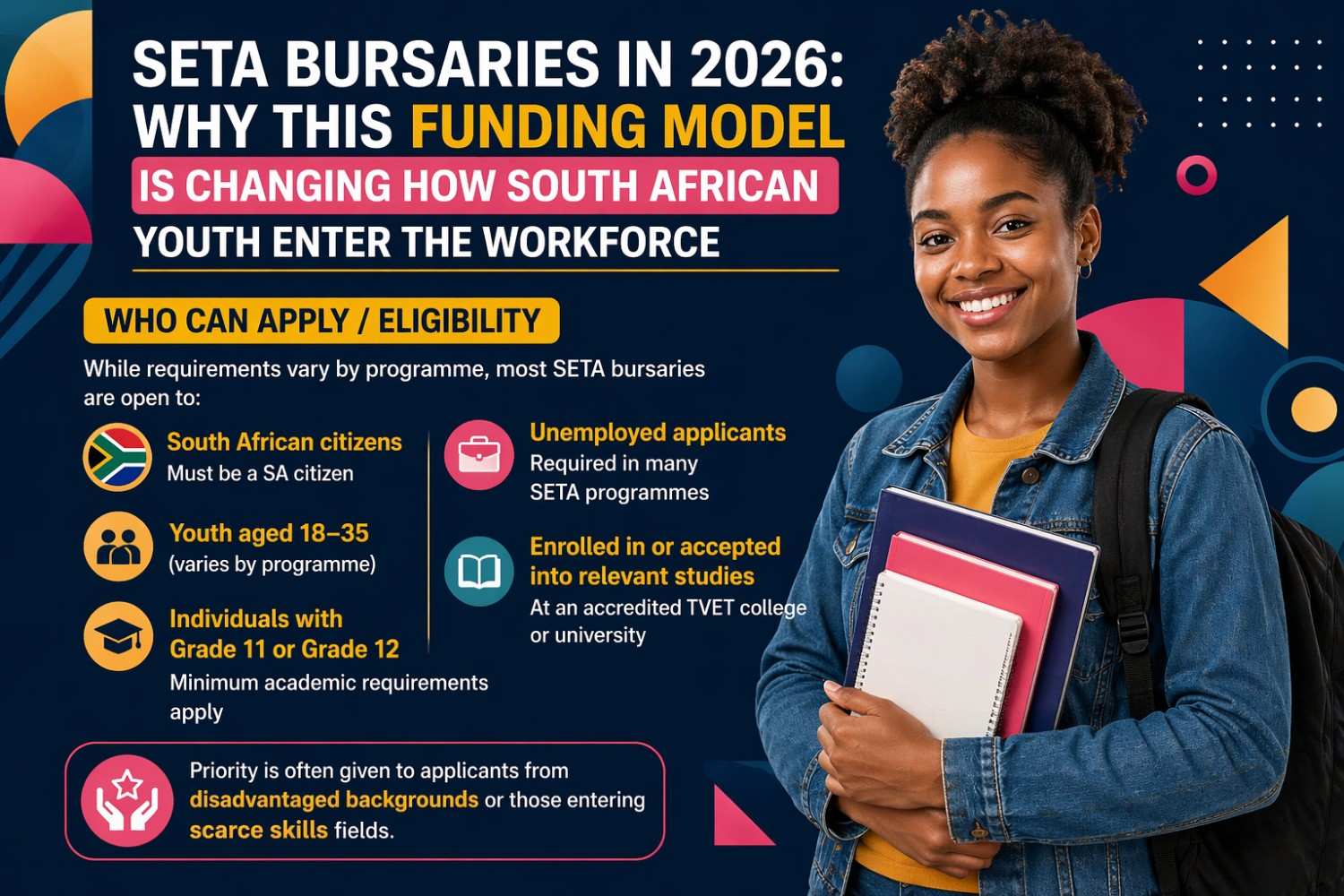
While requirements vary by programme, most SETA bursaries are open to:
- South African citizens
- Youth aged 18–35 (varies by programme)
- Individuals with Grade 11 or Grade 12
- Unemployed applicants (in many cases)
- Candidates enrolled in or accepted into relevant studies
Priority is often given to applicants from disadvantaged backgrounds or those entering scarce skills fields.
How to Apply
To apply successfully:
Step 1: Identify the Right SETA
Choose a SETA aligned with your career path (e.g., Services SETA, MICT SETA).
Step 2: Check Official Opportunities
Visit official SETA websites or trusted career platforms.
Step 3: Prepare Your Documents
- Certified ID copy
- Academic results
- Proof of residence
- Updated CV
Step 4: Submit Your Application
Follow the official application process (online or email).
Step 5: Monitor Your Application
Respond quickly to any communication or interview requests.
Important Things to Know / Practical Tips
- Apply Early
Many programmes have limited spaces - Choose High-Demand Fields
This increases your chances of selection - Double-Check Documents
Incomplete applications are often rejected - Stay Informed
SETA opportunities usually open once per year - Avoid Paying Fees
Legitimate SETA bursaries are free to apply - Focus on Quality Applications
A clear, well-prepared application stands out
Conclusion
SETA bursaries are effective because they are designed with one outcome in mind: employment. By aligning education funding with real industry needs, they provide a direct pathway from learning to earning.
For South African youth in 2026, this makes SETA bursaries one of the most practical and impactful funding options available. With the right preparation, they can open doors to both qualifications and long-term career opportunities.
FAQ
1. Why are SETA bursaries considered effective?
Because they focus on skills that are in demand and often include workplace experience, improving employability.
2. Do SETA bursaries guarantee a job?
They don’t guarantee employment, but they significantly improve job prospects.
3. Can I apply without Matric?
Some programmes accept Grade 11, but many require Matric depending on the field.
4. Are SETA bursaries paid monthly?
Not all, but some include stipends, especially learnership-linked programmes.
5. When do applications open?
Most SETAs open bursary applications once a year, depending on funding cycles
