

Introduction
SETA learnerships are one of the most effective ways for South Africans to gain skills, work experience, and recognised qualifications at the same time. For many young people, they offer a practical route into employment—especially when traditional jobs require prior experience.
Despite their popularity, many applicants still don’t fully understand how SETA learnerships actually work. This can lead to confusion during applications or missed opportunities.
This guide explains how SETA learnerships function, how they are funded, what to expect, and how you can successfully apply.
What Is a SETA Learnership?
A SETA learnership is a structured training programme that combines:
- Classroom learning (theory)
- Workplace experience (practical training)
These programmes are managed by Sector Education and Training Authorities (SETAs), such as the Services SETA, under the Department of Higher Education and Training.
Key outcome:
Learners receive a nationally recognised qualification registered on the National Qualifications Framework (NQF).
Background / Purpose
SETA learnerships were introduced through the Skills Development Act to address two major challenges:
- High unemployment
- Lack of practical job skills
Many employers struggled to find skilled workers, while job seekers lacked experience. Learnerships were designed to bridge this gap.
Their purpose is to:
- Build job-ready skills
- Improve employability
- Support economic growth
- Align training with real industry needs
How SETA Learnerships Work
SETA learnerships follow a structured process that involves three main parties:
- The learner (you)
- The employer (workplace host)
- The training provider
Step-by-step process:
- You apply for a learnership
- If selected, you sign a learnership agreement
- You attend training sessions (theory)
- You gain workplace experience (practical)
- You complete assessments and assignments
- You receive a qualification upon completion
Duration:
Most learnerships run for 12 months, but some may vary.
Key Features / Programmes
SETA learnerships are available across many industries and levels.
Key features include:
- Structured training (theory + practical)
- Nationally recognised qualification
- Monthly stipend (in most cases)
- Workplace experience
- No application fees
Related programmes:
- Internships – workplace experience for graduates
- Apprenticeships – technical and trade training
- Skills programmes – short courses

Table Summary of Important Information
| Feature | Details |
|---|---|
| Programme Type | Learnership |
| Duration | ±12 months |
| Qualification | NQF-registered certificate |
| Training Type | Theory + Workplace |
| Stipend | Yes (varies) |
| Cost | Free |
Who Can Apply / Eligibility
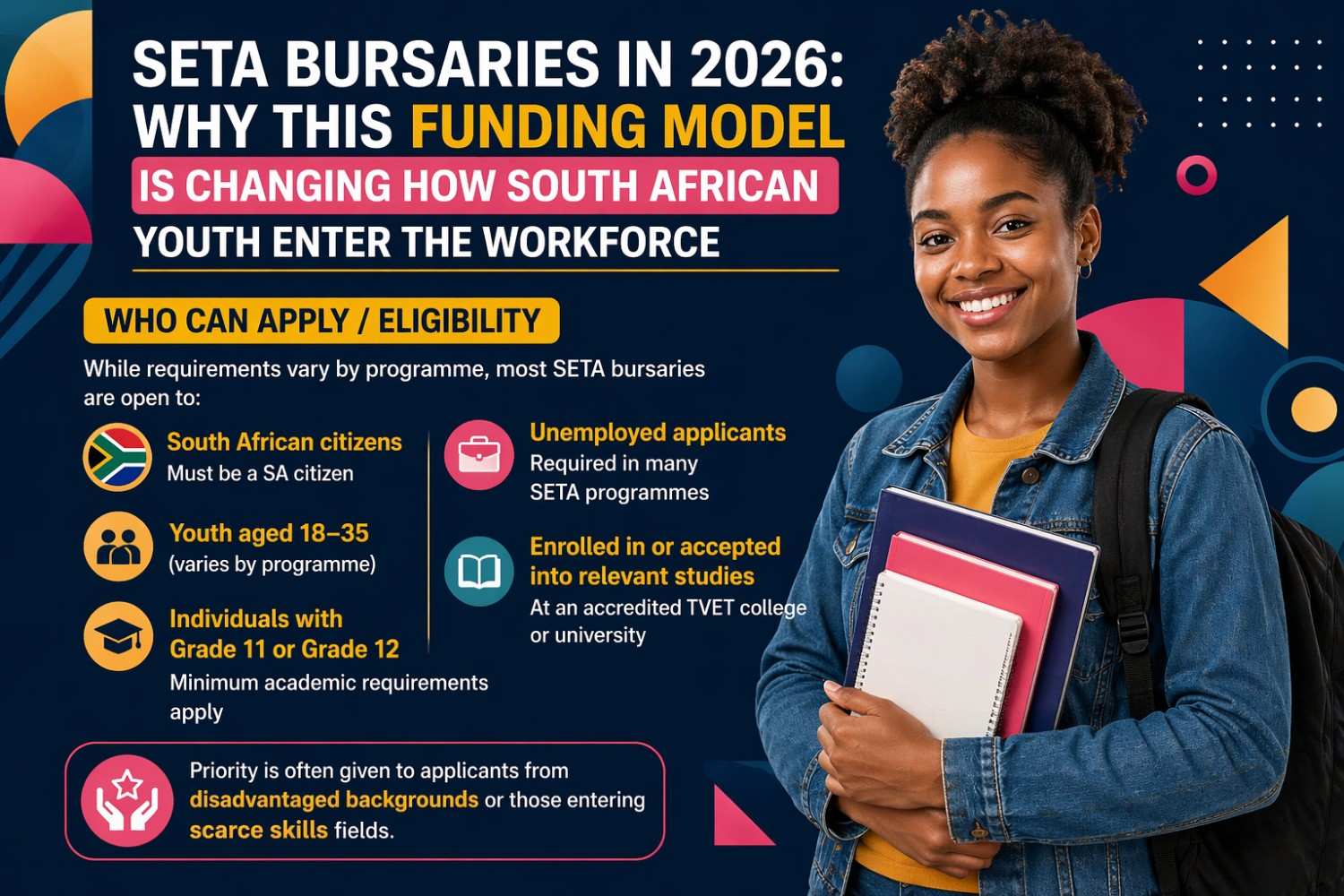
Eligibility depends on the specific learnership, but general requirements include:
Basic requirements:
- South African citizen
- Age between 18 and 35 (varies)
- Minimum education (Grade 10–12 or higher)
- Currently unemployed (for most learnerships)
Also eligible:
- TVET college graduates
- University graduates
- People with disabilities
Always check the exact requirements before applying.
Important Things to Know / Practical Tips
Before applying, it’s important to understand how to improve your chances.
Practical tips:
- Apply early before deadlines
- Ensure all documents are certified
- Use a clear, professional CV
- Apply to multiple opportunities
Important warnings:
- Never pay application fees
- Avoid unverified links or WhatsApp scams
- Only use official platforms
Key realities:
- Learnerships are competitive
- Selection is not guaranteed
- Attendance and commitment are required
Conclusion
SETA learnerships play a vital role in helping South Africans gain practical skills and enter the workforce. By combining education with real work experience, they offer a strong foundation for long-term career growth.
Related Posts:


Understanding how they work gives you a clear advantage—helping you apply correctly, avoid scams, and make better career decisions.
If you are serious about building your future, a SETA learnership could be your first step toward employment.
FAQ
1. Do SETA learnerships pay a stipend?
Yes, most learnerships offer a monthly stipend to help cover basic expenses.
2. Are SETA learnerships free?
Yes. They are funded through employer contributions and should not require any payment.
3. Can I apply without Matric?
Some learnerships accept lower qualifications, but many require Grade 12.
4. Who funds SETA learnerships?
They are funded through the Skills Development Levy collected by the South African Revenue Service.
5. Do learnerships guarantee a job?
No, but they significantly improve your chances of employment by providing skills and experience.
