
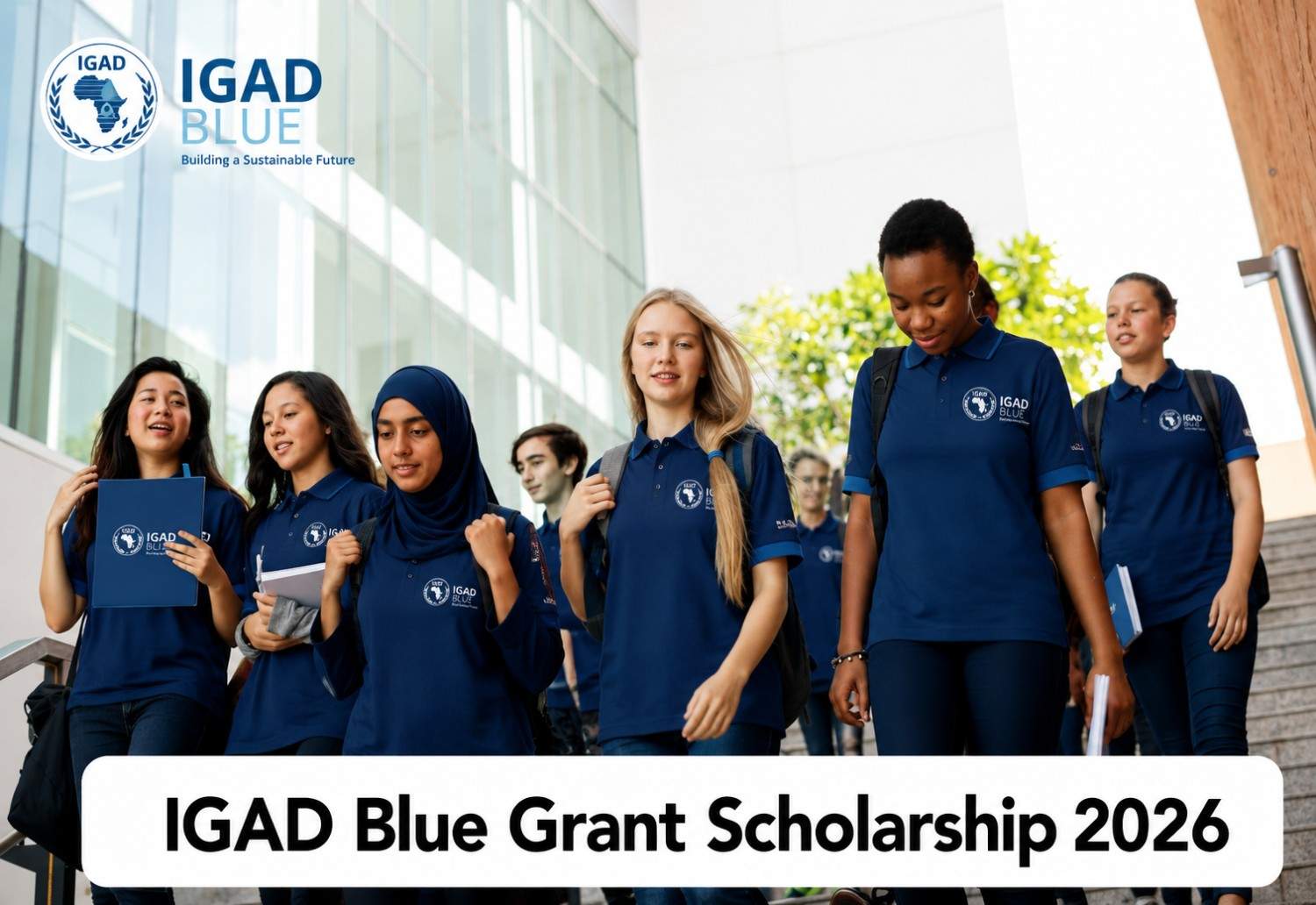
Fully Supported Graduate Study Pathway Linked to University of British Columbia Targets Fisheries, Marine Governance and Coastal Development Experts
A major international scholarship opportunity has opened for professionals working in Africa’s growing blue economy sector.
The 2026 IGAD Blue Grant Scholarship Programme is now accepting applications from eligible professionals in South Sudan, Somalia and Djibouti who want to pursue advanced graduate study linked to sustainable ocean development, fisheries management and regional maritime systems.
The programme forms part of the Building Blue Economy Resilience and Prosperity in IGAD and the Horn of Africa initiative — commonly known as the BE-Prosper Project — and is connected to graduate study opportunities at the University of British Columbia.
For professionals already active in marine systems, fisheries, policy, trade and environmental governance, the opportunity represents far more than academic funding. It is designed as a long-term leadership and regional development pipeline.
What Is the IGAD Blue Grant Scholarship 2026?
The IGAD Blue Grant Scholarship is a specialised graduate study programme developed under the BE-Prosper Project.
The initiative aims to strengthen regional expertise in sectors connected to the blue economy across the Horn of Africa region.
Key Programme Focus Areas
| Focus Area | Description |
|---|---|
| Fisheries management | Sustainable fisheries systems |
| Coastal governance | Marine policy and planning |
| Blue economy development | Ocean-based economic growth |
| Marine spatial planning | Coastal resource coordination |
| Maritime trade systems | Regional connectivity and logistics |
| Sustainable ocean management | Environmental and economic sustainability |
The programme is intended to build highly skilled professionals capable of supporting long-term economic resilience and sustainable development within the IGAD region.
Why the Blue Economy Matters in Africa
The blue economy refers to economic activities connected to oceans, coastlines, fisheries, marine resources and maritime trade systems.
Across Africa, governments and development institutions increasingly view the blue economy as a major future driver of:
- Food security
- Job creation
- Trade development
- Environmental sustainability
- Coastal infrastructure growth
- Climate resilience
As a result, professionals with expertise in marine governance, fisheries and coastal systems are becoming increasingly important.
Who the Scholarship Is Designed For
Unlike many academic scholarships aimed at recent graduates, this programme specifically targets professionals already working in relevant sectors.
Eligible Applicants Include Professionals Working In:
- Government departments
- Public sector institutions
- NGOs
- Civil society organisations
- International organisations
- Intergovernmental organisations
- Private sector industries linked to marine systems
The programme focuses heavily on candidates who already demonstrate practical involvement in blue economy-related work.
Countries Eligible for the Scholarship
The scholarship is currently open to nationals from three countries within the IGAD region.
Eligible Countries
| Eligible Country |
|---|
| South Sudan |
| Somalia |
| Djibouti |
Applicants outside these countries may not qualify under the current programme requirements.
Main Study Areas Covered
The scholarship focuses on sectors directly linked to regional blue economy development.
Related Posts:



Relevant Academic and Professional Fields
Applicants may come from backgrounds including:
- Marine and fisheries science
- Environmental economics
- Agricultural economics
- Maritime sociology
- Veterinary science
- Community development
- Maritime engineering
- Civil engineering
- Ocean policy
- Human geography
- Related blue economy disciplines
The programme aims to create multidisciplinary specialists capable of addressing regional development challenges.
Age and Eligibility Requirements
Applicants must meet several minimum requirements before applying.
Minimum Eligibility Criteria
| Requirement | Details |
|---|---|
| Nationality | Must be from eligible IGAD countries |
| Age | 25 to 40 years |
| Employment status | Currently working in relevant sectors |
| Qualification | University degree in relevant field |
| Interest area | Blue economy and sustainable marine development |
Applicants are also expected to show strong commitment to sustainable fisheries, marine governance and regional integration.
How the Application Process Works
The scholarship application process takes place in two separate stages.
Phase 1: IGAD Screening Process
Candidates first apply directly through the IGAD screening process.
During this phase, programme coordinators assess:
- Academic background
- Work experience
- Professional relevance
- Leadership potential
- Alignment with programme goals
Only shortlisted candidates move to the next stage.
Phase 2: University of British Columbia Admission
Successful candidates then proceed to formal graduate admission processes linked to the University of British Columbia.
Additional Requirements May Include
- Graduate application forms
- Reference letters
- Statement of interest
- English language proof where required
- Criminal record checks
- Research proposal requirements
- Identification of thesis supervisors
Meeting IGAD screening requirements does not automatically guarantee university admission.
What Financial Support Does the Scholarship Offer?
The programme is presented as a funded graduate study opportunity.
According to the official call, successful candidates may receive support including:
| Possible Support | Details |
|---|---|
| Tuition support | Academic fee coverage |
| Living stipend | Monthly support allowance |
| Travel support | Study-related travel assistance |
However, final scholarship conditions are only confirmed after all programme and academic requirements are satisfied.
Applicants are encouraged to avoid assumptions beyond the official programme guarantees.
Why Accuracy Matters When Applying
Scholarship applications linked to international institutions are highly competitive.
Strong applications usually demonstrate:
- Clear motivation
- Relevant professional experience
- Realistic career goals
- Regional development interest
- Commitment to returning and contributing to the IGAD region
Accurate and honest applications are often more effective than exaggerated claims.
Documents Required for the IGAD Screening Stage
Applicants must prepare several documents for the first screening phase.
Required Documents
| Required Document | Purpose |
|---|---|
| Letter of Interest | Motivation and eligibility explanation |
| Curriculum Vitae (CV) | Professional background |
| Degree certificate copy | Academic verification |
Candidates should ensure all documents are professional, complete and easy to read.
Where Applications Must Be Sent
Applications must be submitted by email.
Official Application Emails
To: sagal.isman@igad.int
CC: Tegueste.Shimelis@igad.int
Dear Programme Coordinator
Please find attached my application for the IGAD Blue Grant Scholarship 2026 under the BE-Prosper Project.
I have included my Letter of Interest, Curriculum Vitae and copy of my university degree certificate for consideration.
Thank you for your time and consideration.
Kind regards
[Full Name]
Programme-related enquiries may also be directed to:
Why Blue Economy Careers Are Becoming More Important
The global shift toward sustainable resource management is creating growing demand for professionals with expertise in marine systems and environmental governance.
Emerging Blue Economy Career Areas
- Fisheries management
- Coastal planning
- Maritime logistics
- Environmental policy
- Marine conservation
- Sustainable agriculture and aquaculture
- Regional trade development
Professionals with advanced training in these fields may become increasingly valuable across governments, NGOs and international development organisations.
Frequently Asked Questions (FAQs)
Which countries qualify for the scholarship?
The programme is open to nationals of South Sudan, Somalia and Djibouti.
Which university is linked to the programme?
The programme is linked to the University of British Columbia.
Is the scholarship fully funded?
The programme may include tuition, stipend and travel support subject to conditions.
What sectors does the scholarship focus on?
The programme focuses on fisheries, marine governance, coastal planning and blue economy development.
Who should apply?
Professionals already working in relevant blue economy-related sectors.
Final Thoughts
The IGAD Blue Grant Scholarship 2026 represents a major opportunity for professionals in the Horn of Africa seeking advanced expertise in sustainable marine and blue economy systems.
By combining regional development priorities with international graduate study opportunities linked to the University of British Columbia, the programme aims to develop future leaders capable of strengthening fisheries, coastal governance and economic resilience across the IGAD region.
For professionals already active in blue economy sectors, this scholarship could become a powerful pathway toward advanced leadership, international exposure and long-term regional impact.
